
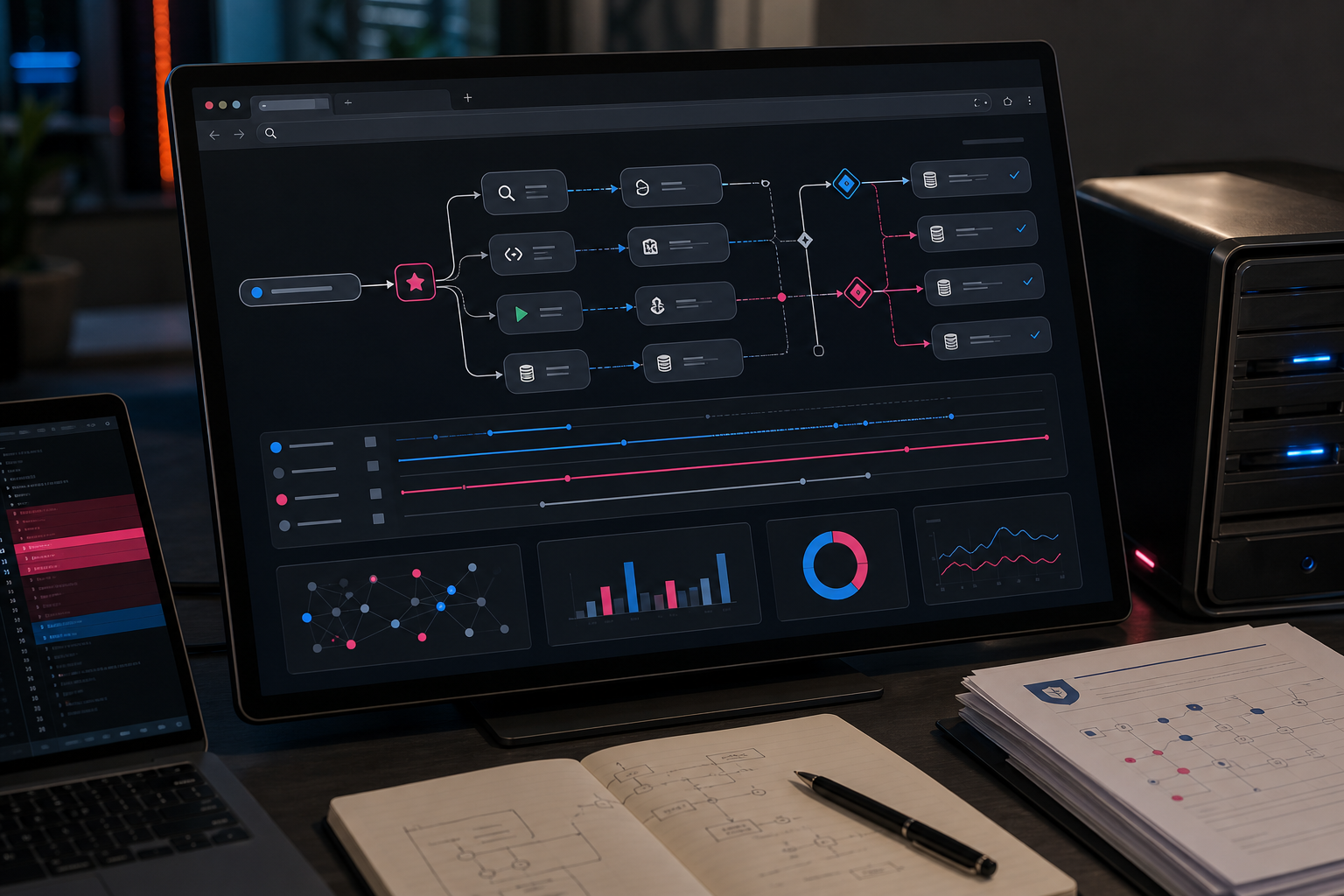
A Stealth Launch: No Press Release, Just Job Boards
Netflix INKubator is a GenAI-native animation studio incorporated in March 2026 that entered public view not through a launch announcement but through open hiring postings. Journalist Janko Roettgers first surfaced the job listings in the Lowpass newsletter on May 14, 2026 . When Sherwood News approached Netflix for comment, the company declined. Netflix confirmed INKubator's existence to Cartoon Brew only after the story had already broken—a sequence that makes the non-announcement strategy transparent in hindsight.
The contrast with every major studio's AI announcement strategy over the past decade is striking. Pixar, Disney, Warner, and DreamWorks have all issued carefully managed public statements about AI adoption, curated for investor relations and talent-perception management. INKubator's non-announcement points toward two specific pressure points the studio appears to be navigating: active IATSE Local 839 negotiations with major studios over AI usage clauses, and the regulatory and reputational scrutiny that attaches to any AI-in-entertainment headline. Building quietly first, announcing later (if at all) preserves operational and negotiating optionality.
INKubator operates as a distinct unit under the broader Netflix Animation umbrella , with its own AI-native production pipelines running in parallel to Netflix Animation Studios' traditional workflows. The head executive is Serrena Iyer in the COO role, a production veteran with prior positions at DreamWorks Animation, MRC Studios, and A24 Films . That profile—traditional animation production experience combined with comfort navigating streaming-era content operations—signals INKubator is framed as a complement to existing infrastructure, not a full displacement.
For developers building in the GenAI tooling space, the zero-announcement approach carries a practical implication: Netflix is in a pre-competitive phase. Building the pipeline, validating the approach, and establishing internal expertise before signaling to vendors, partners, or competitors what the architecture looks like. The job listings become the primary available data source—and reading them carefully is the most reliable signal about what Netflix actually believes works at production scale.
The Hiring Architecture: Role Distribution and What's Missing
INKubator's active job listings cluster into four tracks: production leadership (producers, production supervisors), CG and technical craft (CG artists, technical directors), ML and backend engineering, and creative-AI hybrid roles bridging storytelling with AI-directed production. The distribution is as meaningful for what it omits as for what it includes: no inbetweeners, no cleanup animators, no junior production assistants, and no entry-level engineering roles appear anywhere in the listings.
| Role Track | Representative Titles | Listing Status | Notable Absence |
|---|---|---|---|
| Production Leadership | Producer, Production Supervisor, Production Manager | Active openings | Junior PA, entry Production Coordinator |
| CG / Technical Craft | CG Artist, Technical Director, Rigging Supervisor | Active openings | Inbetweener, Cleanup Animator |
| ML / Backend Engineering | Backend Engineer, Head of Technology, ML Ops | Active openings | Entry-level engineer, QA |
| Creative-AI Hybrid | Creative Director, AI-Directed Story Artist | Active openings | Junior animator, entry storyboard artist |
In traditional animation production, the lower tiers of the org chart—inbetweeners, cleanup artists, junior production coordinators—are where significant portions of frame-by-frame execution happen. These roles are also where junior talent enters the industry and builds craft. INKubator removes this tier entirely. The consistent interpretation: the AI pipeline is expected to handle execution-layer work that would otherwise require those roles. Senior staff direct the tools; the tools generate the frames.
"Netflix is creating a next-generation, creative-led, GenAI-native animation studio" designed to provide "an artist-focused environment to experiment in, where they can explore how new tools and workflows, alongside traditional animation creative practices, can be leveraged to enhance their storytelling capabilities." — Netflix, statement to Cartoon Brew (source: Outlook India / Respawn)
The concentration in senior generalists rather than junior specialists follows a pattern visible in other GenAI-enabled production contexts: the leverage point shifts from labor volume to taste and direction. A senior technical director who can write effective prompts, evaluate model output quality, iterate a character LoRA checkpoint, and maintain pipeline coherence provides more throughput than multiple inbetweeners executing instructions manually. That math, if it holds at INKubator's target quality level, has structural consequences for entry-level hiring across the broader industry—not only at this studio.
The ML and backend engineering track is worth separate attention. Its presence alongside production and craft roles confirms that INKubator is not simply a creative team licensing existing tools via API calls. There is internal engineering capacity to build, modify, and maintain pipeline components. The Head of Technology role in particular—given the multi-vendor generative video landscape described below—likely carries ownership of the orchestration layer that routes work across generative models, manages rendering infrastructure, and maintains consistent interfaces for creative staff who should not need to know which backend is running at any given time.
Inferring the Tech Stack from Job Description Language
Netflix has not disclosed which AI models or vendors power INKubator's pipeline. Job description language is deliberately vendor-agnostic—a posture that itself signals something: Netflix does not want to be locked into a single model provider during a period when the generative video space is evolving fast enough that this quarter's leading model may not be next quarter's. What the job descriptions reveal in aggregate is an orchestration-first architecture that wraps multiple providers rather than committing to one.
| Pipeline Layer | Probable Tooling | Inference Signal | Confidence |
|---|---|---|---|
| Generative video (primary) | Runway Gen-3 / Act-One | Studio-grade video gen standard; Act-One targets character animation specifically | High |
| Generative video (alt) | OpenAI Sora | Referenced in industry reporting on INKubator tooling context | Medium |
| Generative video (alt) | Google Veo | Referenced in reporting; Google enterprise licensing available | Medium |
| Generative video (experimental) | Higgsfield, Genmo, SD video variants | Industry reporting; multi-vendor posture implies active tool evaluation | Low–Medium |
| Workflow orchestration | ComfyUI (custom pipelines) | Technical Director and CG role descriptions; de-facto assembly layer for custom pipelines | High |
| Character consistency | Fine-tuned character LoRAs | CG artist role descriptions reference character identity and style consistency work | High |
| Orchestration strategy | Custom multi-model wrapper (Head of Technology) | Role scope implies routing layer across providers, not single-vendor API | High (structural) |
The ComfyUI reference is worth unpacking for developers. ComfyUI has become the de-facto node-based assembly environment for production pipelines that need to chain multiple models, control inference parameters programmatically, and maintain reproducibility across complex workflows. Its adoption in a Netflix context—if confirmed—would represent significant enterprise validation of what has primarily been a prosumer and indie-studio tool. For developers building tooling for studios, ComfyUI's API surface and extension model become relevant integration targets regardless of whether INKubator specifically is the customer.
Character LoRA fine-tuning references in CG role descriptions are equally significant. One of the well-documented failure modes of generative video pipelines is character inconsistency across shots: a character's face, proportions, or clothing drift between scenes, making continuity maintenance expensive. Fine-tuned LoRAs trained on character reference sheets address this at the model level rather than in post. The fact that CG artist job descriptions reference this work explicitly confirms Netflix expects human craft investment here—it is not a solved problem that ships pre-configured off any commercial tool.
The Head of Technology role implies an orchestration layer that wraps multiple generative models rather than committing to a single vendor API. This is the workflow glue problem: how do you route a prompt to the right model for a given task, manage inference costs across providers, handle output validation, version pipeline configurations, and maintain a consistent interface for creative staff who should not need to know which backend is running? That layer—absent a dominant commercial solution in 2026—is likely being built partially in-house. For external developers, this gap is where the most actionable product opportunity sits.
No proprietary Netflix-built generative model has been announced for INKubator. Given Netflix's existing ML infrastructure investment in recommendation, encoding, and CDN optimization, an internal model is not implausible longer-term, but the current signals point to a best-of-breed integration layer over externally sourced generation capacity. The multi-vendor posture is both a hedge against model obsolescence and a practical acknowledgment that no single model leads across all the tasks a production pipeline requires.
InterPositive Acquisition: The Post-Production Half of the Stack

The same month INKubator was incorporated—March 2026—Netflix acquired InterPositive, an AI filmmaking startup co-founded by Ben Affleck, for up to $600 million depending on performance targets . The timing was not coincidental. InterPositive's core technology takes a different approach to AI-assisted production: rather than generating content from scratch, it trains AI models on a specific film's already-shot footage to accelerate post-production finishing work—color grading, visual effects, cleanup, and scene completion. The acquisition adds a second AI capability to Netflix's stack, one that addresses the pipeline's downstream half.
Taken together, INKubator and InterPositive form a coordinated two-stage content pipeline. INKubator covers generation: prompt-to-frame animation production using generative video models and custom orchestration. InterPositive covers finishing: AI-assisted post-production trained on a project's own existing footage to maintain visual consistency and accelerate delivery. The combination gives Netflix AI tooling that spans from initial creation through final delivery—not a single-point AI integration, but an architectural wager on AI's role across the full production lifecycle.
According to reporting by Fiction Horizon, the InterPositive acquisition positions Netflix with AI tooling that covers both production creation and post-production finishing—a scope that no single generative model addresses on its own, and that no prior studio-level AI integration has attempted as a coordinated pipeline purchase.
InterPositive's footage-trained approach is technically distinct from INKubator's generative front-end, and that distinction matters architecturally. Zero-shot generative video struggles with consistency: a character looks slightly different in each shot because the model has no persistent identity anchor. Footage-trained post-production AI can use already-established visual identity as a training signal—which is precisely why it pairs logically with a generative front-end. A studio that generates animation via INKubator could route sequences through an InterPositive-style finishing pipeline to enforce consistency and complete the output. Whether that specific integration is in production is not disclosed, but the architectural logic is coherent and the March 2026 timing suggests it was planned.
The $600 million acquisition figure—contingent on performance targets—signals Netflix's confidence in the pipeline's commercial potential . Performance-gated deal structures typically tie payout to content delivery milestones or technology integration outcomes. The scale of the potential payout reflects an expectation that AI-assisted production will meaningfully affect Netflix's content costs or output volume. This is not a skunkworks experiment; it is a core operational bet with financial structure to match.
What "GenAI-Native" Means as a Pipeline Design Decision
"GenAI-native" as a descriptor is not marketing language in INKubator's context—it defines a specific architectural decision. INKubator was designed from the ground up around AI tooling rather than retrofitting generative models into a pre-existing production organization. That distinction has concrete consequences: the org chart, the tool stack, the content formats, and the hiring model all follow from the constraints and capabilities of the AI pipeline, not from a traditional animation studio's inherited workflows.
The content scope reflects the current technical ceiling honestly. INKubator's initial mandate is short-form animated content and experimental specials—not feature films or long-running series. This is consistent with where generative video actually is in 2026: coherence over multi-minute sequences is difficult to maintain, character consistency across shots requires active engineering investment, and lip-sync fidelity for complex dialogue scenes remains inconsistent at production quality. Short-form content keeps these constraints from becoming pipeline blockers while the tooling matures.
The stated goal—"short films with the quality of feature-length movies"—frames this as prompt-to-screen compression rather than human augmentation. In a traditional augmentation model, AI tools assist human animators who remain in the execution loop at frame level. INKubator's design points toward a different model: senior directors set creative direction, AI executes it, humans review and iterate. The loop is narrower at execution and wider at direction. That compression, if it works at acceptable quality levels, changes the cost structure of short-form animation significantly.
Netflix Animation Studios continues to operate in parallel using traditional production pipelines for its existing slate. INKubator is not a replacement for that infrastructure—it is a parallel controlled experiment. The dual-architecture strategy gives Netflix optionality: if INKubator's pipeline proves commercially viable at scale, the learnings can propagate to the broader organization. If it encounters quality or consistency limitations that short-form tolerance does not expose, the traditional studio is unaffected. For developers, this parallel-track structure means Netflix is running a genuine architectural comparison, which changes how quickly the validated learnings—and the tooling gaps they reveal—become visible to the rest of the industry.
Labor Context: INKubator and the Animation Guild Dispute
INKubator launched during active contract negotiations between IATSE Local 839—the Animation Guild, which covers animators, story artists, and many production roles at major studios—and studios over AI usage clauses in collectively bargained agreements. Netflix has not disclosed whether INKubator's AI-integrated workflows are covered by any existing guild agreement, and the studio's hiring profile does not map cleanly onto the tiered role structures that traditional IATSE contracts address.
The WGA and SAG-AFTRA negotiations of 2023 established a precedent directly relevant to INKubator: AI governance provisions covering training data, performer likeness, and automation of creative work were negotiated into contracts only under strike pressure, not offered voluntarily by studios. IATSE 839 is now in a comparable position on the animation side. INKubator's timing, structure, and non-announcement strategy suggest Netflix is aware of this dynamic and has chosen deliberate operational opacity while it builds out the model.
IATSE Local 839 has publicly raised concerns about AI's structural impact on animation employment and the need for explicit contractual language covering AI's use in production pipelines. INKubator's senior-heavy, no-entry-level hiring model sits outside the traditional tier structure that IATSE agreements were designed to govern—creating potential ambiguity about which obligations, if any, apply. — Per labor reporting by Fiction Horizon and Automaton Media
The senior-heavy org design may fall structurally outside traditional guild coverage tiers—not necessarily by deliberate intent, but as a consequence of the hiring model itself. Traditional IATSE agreements at animation studios cover specific production roles by title and function. A studio that does not hire for those roles—because an AI pipeline handles the work instead—creates genuine ambiguity about which, if any, guild agreements apply. That ambiguity is either a near-term liability (if IATSE pursues organizing or contract coverage expansions to address AI-native studios) or a structural feature of the model (if Netflix concludes the studio can operate outside existing framework agreements while those negotiations proceed).
The broader industry implication is concrete: INKubator is a test case for whether a GenAI-native production unit can operate at scale without the labor agreements that govern traditional animation studios. The answer will be observed closely by every major studio with an animation division, by IATSE, and by developers and investors building tooling for whichever market structure emerges from either outcome.
Implications for Developers Building AI Production Tooling

For developers in the AI video and production tooling space, INKubator's architecture sends specific signals about where demand is concentrated and what problems remain genuinely unsolved. The multi-vendor posture is the starting point: Netflix is not committing to one generative model, which means the value concentrates in the orchestration layer—workflow routing, output validation, provider abstraction, cost management across inference calls—not in owning or fine-tuning a model. Tooling that makes multi-vendor orchestration robust and production-repeatable has direct leverage here.
Character consistency across shots remains the most technically significant unsolved problem in generative video for narrative content. Fine-tuned character LoRAs address this at the model level, but creating, managing, and versioning LoRA checkpoints for production-scale projects adds substantial operational complexity. Developer tooling that streamlines the LoRA training pipeline—character reference ingestion, training run management, checkpoint validation against reference stills, version control across shot sequences—sits at a high-value intersection of the problem space. No off-the-shelf solution in 2026 handles this reliably at professional quality levels across a full short film.
ComfyUI's emergence as the de-facto assembly layer for custom pipelines is worth tracking carefully on the enterprise adoption curve. ComfyUI was built for individual practitioners and small studios; its interface and operational model were not designed for multi-person production teams with review workflows, access controls, version histories, and audit trails. As studios like INKubator adopt it at scale, the gap between ComfyUI's current UX and enterprise production requirements becomes a product surface. Workflow management, team collaboration features, and production-grade reliability tooling built around ComfyUI's node model is a concrete build target with a clear and growing customer base.
The "no junior roles" org design, if INKubator ships content and validates the production model, will be benchmarked against by other studios facing similar labor cost pressures and AI capability curves. Studios will use INKubator's headcount structure as a reference when designing their own AI production units. That creates a predictable adoption path: tooling that works at INKubator scale gets evaluated by other animation and production shops within 12–24 months of INKubator's first public content release. Building for INKubator-style pipelines now is, in effect, building for the next wave of adopters who follow once INKubator's first output provides public proof of concept.
Frequently Asked Questions
What is Netflix INKubator and when was it founded?
Netflix INKubator is a GenAI-native animation studio incorporated in March 2026 and operating as a distinct unit under the Netflix Animation umbrella. It was never officially announced via press release or public launch statement. Its existence first became publicly known on May 14, 2026, when journalist Janko Roettgers reported on its job listings in the Lowpass newsletter. Netflix subsequently confirmed the studio to Cartoon Brew, describing it as a "next-generation, creative-led, GenAI-native animation studio" designed to give creators an artist-focused environment to experiment with new tools and workflows alongside traditional animation creative practices. The studio is led by Serrena Iyer in the COO/head executive role, a production veteran from DreamWorks Animation, MRC Studios, and A24 Films.
Which AI tools does INKubator's pipeline use?
Netflix has not disclosed which specific AI models or vendors power INKubator's pipeline—job descriptions are deliberately vendor-agnostic. Based on job description language and industry reporting, the most likely candidates include Runway Gen-3 and Act-One (for character animation), OpenAI Sora, Google Veo, Higgsfield, Genmo, and Stable Diffusion video variants. ComfyUI-based custom workflows appear in Technical Director and CG role descriptions. Fine-tuned character LoRAs for identity consistency are referenced in CG artist postings. The architecture is multi-vendor and orchestration-heavy rather than committed to a single model provider. No proprietary Netflix-built generative model has been announced for INKubator specifically.
Why does INKubator list no junior animator roles?
INKubator's hiring model concentrates entirely in senior production leadership, technical craft, ML engineering, and creative-AI hybrid roles. No inbetweeners, cleanup animators, junior production assistants, or entry-level engineers appear in the active listings. The structural interpretation consistent with the rest of the hiring signal: INKubator's AI pipeline is designed to handle execution-layer work that traditionally required junior animators—generating frames, handling inbetweening, and executing frame-level direction from senior staff. This shifts the leverage point from labor volume to creative direction and AI tool oversight, which requires senior generalist skill rather than entry-level specialist execution. The org design concentrates investment in people who direct AI tools rather than people who manually execute the output those tools produce.
How does the InterPositive acquisition relate to INKubator?
Netflix acquired InterPositive—an AI filmmaking startup co-founded by Ben Affleck—in March 2026 for up to $600 million depending on performance targets. InterPositive's technology trains AI on a specific film's already-shot footage to accelerate post-production finishing work such as color grading, visual effects, cleanup, and scene completion. INKubator handles the generation side of the pipeline (creating animated content using generative AI models from scratch), while InterPositive addresses the finishing side (AI-assisted post-production trained on existing project footage). Together they give Netflix AI tooling that spans from initial content creation through final delivery—a coordinated two-stage pipeline rather than a single-point AI integration, incorporated simultaneously in March 2026.
What does INKubator mean for the animation labor market?
INKubator launched during active IATSE Local 839 negotiations with major studios over AI usage clauses in animation production agreements. No guild agreement covering INKubator's AI-integrated workflows has been publicly disclosed. The WGA and SAG-AFTRA 2023 negotiations established that AI governance provisions are typically negotiated under strike pressure rather than offered voluntarily by studios—IATSE 839 is now in a directly comparable position on the animation side. INKubator's senior-heavy, no-entry-level hiring model may fall outside the traditional tiered role structure that IATSE agreements were designed to cover, creating genuine ambiguity about which labor obligations apply. Other studios will watch INKubator's labor resolution—or lack of it—as a template when designing their own AI production units.
What the Stack Signals, and What Comes Next
INKubator's significance is not that Netflix built an AI animation studio. It is how the studio was built: quietly, structurally, with a hiring model that reflects the AI pipeline's actual capabilities and limitations rather than retrofitting AI onto an inherited org chart. The non-announcement was deliberate; the absence of junior roles is load-bearing; the multi-vendor orchestration posture reflects the current state of the generative video market honestly. Each of these choices is a legible engineering and business decision, not a positioning exercise.
For developers building AI production tooling, the near-term signal is specific: orchestration layers, character consistency infrastructure, and enterprise-grade ComfyUI tooling are where unsolved problems concentrate. The medium-term signal is that INKubator's org design will propagate to other studios once content ships and validates the model—creating a wave of adopters looking for the same pipeline components, with the same gaps. The labor question remains genuinely open: IATSE 839 negotiations will determine whether the senior-heavy, AI-native production model operates under collective bargaining or outside it, with direct implications for how other studios design their own AI production units.
The InterPositive acquisition rounds out the picture. Netflix is not experimenting with a single AI capability in isolation. The March 2026 simultaneity of INKubator's incorporation and InterPositive's acquisition indicates coordinated pipeline architecture planning rather than opportunistic deal-making. When INKubator's first content surfaces—whether announced officially or discovered again through secondary signals—the two-stage pipeline it represents will be the clearest public demonstration yet of what AI-native content production at streaming scale actually looks like in practice. The job board was the first signal. The content will be the proof.
Last updated: 2026-05-28. Based on public job listings, industry reporting from Lowpass/Sherwood News, and Netflix's statement to Cartoon Brew as of May 2026. Netflix has declined to comment on INKubator's specific tool stack, vendor contracts, labor agreements, or release timeline beyond the Cartoon Brew confirmation.